DoItTogether is a lived experience advocacy platform. We aim to move beyond awareness and into action. With aims to fundraise for vital equipment, assessments, and recovery services that are often out of reach. While using our voice to challenge the ongoing stigma around conditions such as DID, Tourette's syndrome, OCD, ADHD, and addiction.
Our ultimate mission is to make a real, notable change, bridging the gap between surviving and thriving, through a series of dedicated fundraising campaigns and honest advocacy.


Founder & lead advocate
I'm Vincent Sunny, an advocate and content creator living at the intersection of complex conditions. My mission is shaped by my lived experience with DID, OCD, ADHD, Tourette's syndrome, and harm reduction.
For a long time, these conditions contained me and made me feel hopeless. Today, they are the fuel that drives change.
I work to change the conversation and perspective on plurality and mental health. My journey so far has taught me many things, but one truth I hold close is that Community is essential.
I created DoItTogether to move beyond just sharing my story and into real action that will benefit people in similar positions.
To ensure all my peer support initiatives are safe and supportive, I hold CPD-certified training in: Counselling skills, First aid for mental health, anxiety awareness, borderline personality disorder awareness, and 20 hours of CPD-certified training in understanding & working with complex traumatic dissociation.
My story
The struggle and the pain:
My early years were defined by labels I didn't choose: "Difficult", "Naughty", and "Defiant".
I was bounced through the care system, navigating over 30 different places, all before age 17.
I never felt like I fit in, I struggled with everything, I felt like everyone else had been given an instruction manual, and I hadn't.
Without the tools to manage everything, i was experiencing i sadly fell deep into drug and alcohol addiction as a late teen.
I sank deeper and deeper until I finally found out the truth. What was happening to me was real, and it all had names! It was ADHD, OCD, DID, and Tourette's syndrome.
The turning point:
Learning that I wasn't broken, but was actually living with multiple conditions, was the first step in switching from a narrative that portrayed me as a problem to a journey of authenticity and recovery.
Today i don't just carry these labels, I advocate for them.
Contact us:
Questions
Complaints & compliments
Book a lived experience education session
Suggestions for future projects
Request support
Our current projects & services
Navigation & pathways support
Navigating the UK healthcare system can be incredibly difficult for people navigating neurodiversity, complex mental health, and dissociation.
Being stuck in assessment and treatment limbo and knowing what funding or specialist services are available can be deeply confusing, overwhelming, and difficult.
We offer completely free peer-led administrative advocacy to help you understand and navigate the structural side of the NHS.
What we can guide you on:
Specialist clinics: Understanding which UK clinics may be able to help you based on the struggles you are navigating.
Funding pathways: Unpacking the paperwork steps for individual funding requests, or right to choose pathways, so that you can collaborate more confidently with your GP/mental health professionals.
Appointment preparation: We can help you to organise and structure your thoughts, symptoms, and areas that need support into clear, structured notes.
Our legal boundaries: We provide structural, administrative guidance to help you navigate system pathways, we are not medical professionals or legal representatives, we do not provide diagnosis, crisis intervention, clinical recomendations or medical advice.
Dissociative discussions
STATUS: Ongoing
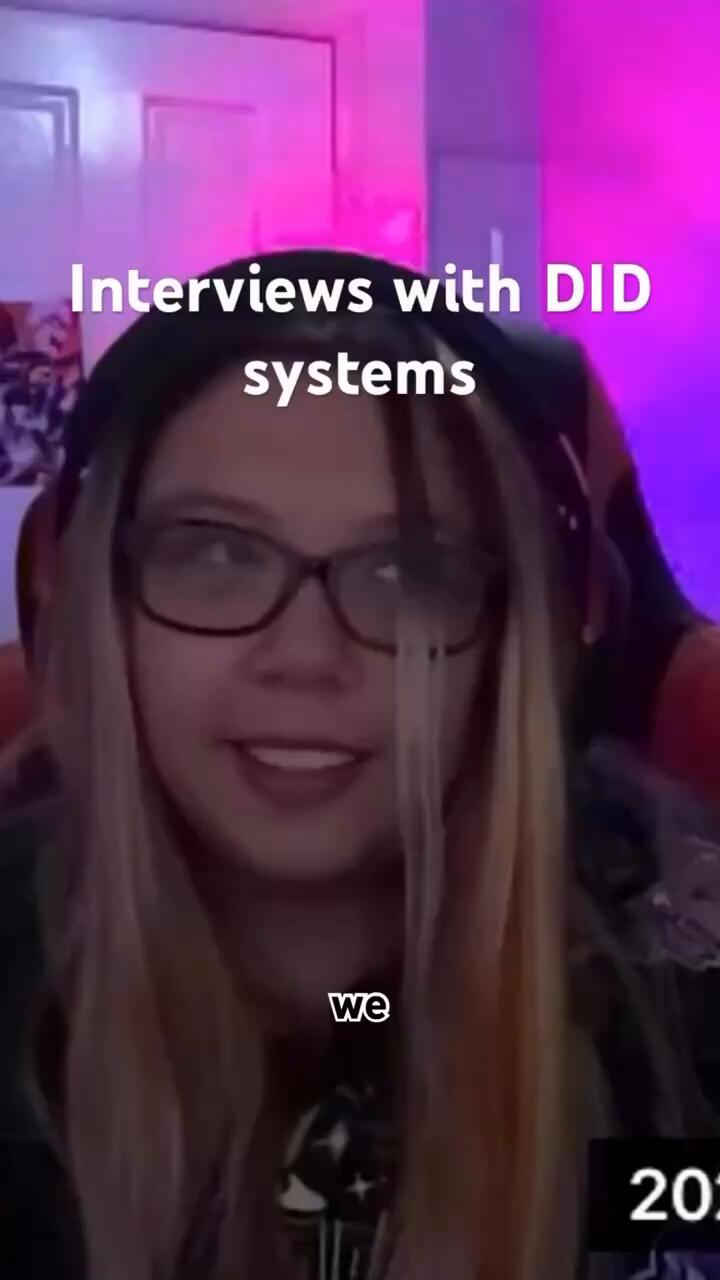
We are partnering up with the DID community to conduct interviews covering a range of topics! This project aims to share various perspectives on living with DID.
We are excited to share these interviews. Stay tuned.

Full interviews can be seen on our YouTube

The memory circle
STATUS: Ongoing
We are creating a space for people navigating grief, not a therapy space, not a space aimed towards moving on. A space to talk about the person you lost, to share memories, and a space to carry on your person's memory. We will meet once a month for 60 minutes via Zoom. There is no obligation to talk, but if you want to, you can. We only ask that when someone is talking, everyone else is listening. If someone needs the whole meeting, they can have it; if someone wants to talk for only a minte they can, it's very much an informal space. Please be respectful. What is said in the group must stay in the group! We are not medical professionals or therapists; we are simply fellow grievers who want to create a space to honour the memory of our lost loved ones.
Project persecutor
STATUS: Ongoing
Persecutor alters are chronically misunderstood. And we want to change that, we are inviting all persecutor alters to take part in a project of change. We are opening our virtual doors and welcome all persecutor alters to share their internal experiences. All submissions are anonymous, and we will then use your submissions to help fellow systems understand their persecutors.
Your submissions will be sorted into our "understanding persecutors" archive, so that when a system is struggling to understand their persecutors, they can refer to our archive and hopefully find some clarity, empathy, and understanding! You can submit your words to the archive by pressing the button below, you can also view the archive right here on our site!
Chat to connect
STATUS: Ongoing
At DoItTogether, we have faced NHS waitlists, isolation, and felt the social rejection so sadly associated with mental health.
That is why we are hosting weekly connection virtual peer support groups.
Once a week, our group meets, aimed at breaking some of that isolation by bringing together a community of people in similar positions!
This space is judgment-free, but we follow three strict rules:
Don't share detailed trauma depictions. Always hold space for your peers, stick to our traffic light safety guidance!
If you have any questions, feel free to contact us!
Anyone struggling with mental health is welcome in this group (UK).
The zine
STATUS: Available for purchase
We have launched the first issue of our zine! Aimed towards neurodiversity, mental health, and plurality, our zine is jam-packed with tools and skills!
We have various versions available for accessible affordability, including a digital zine costing £3 per product, the full package which includes our zine and a variety of our stickers and badges, a subscribe to save option, and finally just the physical zine.
All contributors and featured people will receive a free digital copy!
Click the button below to submit something for our zine.
And the button below that one to purchase our zine.
We are taking submissions for our zine. Share your contribution by clicking below and filling out the submission form!

Neurodiversity pride stickers
Our products

Our zine
Plurality pride stickers
Our misunderstood protectors archive
Submissions are sorted into each category (press the buttons above to view each section). We sort submissions to the best of our abilities. If you have any feedback on this section, please navigate to the contact box to get in touch!
Pushing loved ones away
This section explores why parts may push friends, partners, or support systems away.
Often, relationships can feel deeply vulnerable for persecutors and potentially trauma-holding parts, forcing people to leave in the prediction of harm is often a desperate attempt to protect the system.
"Sometimes I feel scared when people get too close. I worry that some of us trust too easily, so I can't help but push those people backwards. Being too close feels suffocating. In the past, people only left us alone if we upset them, that's why I push people away by being mean."
-Anonymous participant
"I wish people understood that sometimes it's not always intentional harm, but it can be unintentional. I tend to come off mean, but I'm always joking. Because I'm seen in only a negative light, people assume I'm doing it to be mean and not catch on that I'm joking, but when other alters do the same thing, it is suddenly fine?? It really upsets me. I also wish people would understand that sometimes I hurt to push away to protect them. its not always about making them suffer, it's about protecting them or sometimes even us! sometimes when someone has really hurt us, I will sometimes accidentally go too far. I feel really guilty, and it feels like sometimes people don't think persecutors can feel guilt about these things. People also forget that sometimes feeling negativity is really hard to hold in!! I can get so angry and don't know where to place it, so when someone does something wrong, it just spills out without control. People will wish I come to them to vent and rant, but when I do, I'm the problem? And then when I go somewhere else, including unhealthy coping mechanisms, I'm still the bad person because "why didn't you communicate with me?" It gets so lonely sometimes, to be feared and completely misunderstood. luckily i have people who let me crash out and let me joke, but sometimes the most comforting thing I have is that my system sees me for me and who I am. It makes me happy that they see me as a protector, and I'm just doing my job, even if I'm doing it wrong"
-Anonymous participant
"I have a persecutor heavy system. I have had my entire life. Honestly? Most of it is intensely isolating myself, pushing people out, and being mean to keep myself safe. I can see a lot of it in how I trust people; it takes years, and it's lost instantly. I push people away when I feel like they're too close, and I run when they push closer. I yell, lash out, scream, insult, and more, all to keep potential danger away. But also to keep potential friends away. People = danger. And I would rather be alone than be vulnerable. My persecution is in my self-image, too. I berate myself, bully myself, and punish myself for everything, before anyone else has to."
-Anonymous participant
" Don't mean to be mean, I'm just scared. I don't want people to close to me. I'm scared they will hurt me. I don't mean to make us lose friends. I'm scared we will get hurt. The two songs Queen of Mean from Decendance 3, and Monster by Skillet represent how our persecutors feel internally"
-Anonymous participant
"I hate everything and everyone. People are just so frustrating and mean, and I try hard to make sure we are meaner "
-Anonymous participant
"I wish people understood that sometimes I see things the others don’t, I don’t give the benefit of the doubt, and the part they’ll never admit is I’ve never been wrong. I’ve clocked every single person who’s hurt us before they’d done anything overt enough to be picked up on. Just because I go about dealing with it in ways you don’t like doesn’t make me wrong. I am still worth being listened to. I also deserve to exist just as much as the rest of the system, as the rest of the world. I do damn good work, even if my methodology is “flawed”. I do not owe you change to have the right to my existence and my joy."
- Hekate of The Lady Baphomet Society
Disrupting success
This part focuses on why parts may disrupt stability, routine, or progress.
For many systems, moving forward feels dangerous; in the past, change may have meant danger.
Disrupting success is often an attempt to restore familiar safety, and protect the overall system from the potential dangers associated with change.
"Our host rushes into things without thinking about what could go wrong. Sometimes, I mess things up on purpose because the host doesn't understand or listen to my worries"
-Anonymous participant
Internal outbursts
This section covers internal hostility or conflict often aimed at the host or other system members.
Rather than pure malice, internal conflict is often a desperate, panicked attempt to be heard.
"Sometimes the others make me angry; they don't understand me or listen, and so I feel like I have to shout. I don't mean to hurt their feelings, but they hurt mine."
-Anonymous participant
"I don't want to be bad. I just am. The things I was made to do made me bad, like them. It's all I know."
-Anonymous participant
"I don't know why I keep getting hated on internally for being upset all the damn time. I can't help it. I am trying to be a normal person, and all they ever do is talk badly about me being the "bad and scary headmate". I can be nice. I try to be nice. But I'm the one who holds anger by no choice of my own, and then I get picked on for being angry and rude all the damn time— it's like they don't even realize THEY are contributing to it. That's all I'll ever be, apparently... just the honorary a*shole within this cluster of a brain who just yells at people and starts fights 'for fun'."
-Anonymous participant
Body and selfcare
This section explores struggles with food, medical care, hygiene, or sleep. These behaviors often stem from a deep detachment from the physical body, holding painful trauma memories, or trying to punish and numb the body to keep the entire system functioning through distress.
"Firstly, I would say I WAS a persecuter. But because of love, understanding, and being listened to, I would say I perhaps cause a bad panic attack maybe once a month. It is ALWAYS when we are pushing too hard and not listening to needs. Having an outburst of emotion that causes self-harm, or yelling at close ones, is not why I exist. It just unfortunately could happen with regulation. I have not self-harmed in almost a year because I actively take part in figuring out how to shift expectations, validate feelings, and get back into the window of tolerance. I highly suggest learning about the window of tolerance if you haven't already. I get triggered by people being rude or unjust, by friends breaking trust, by things that are unfair that I cannot control. I want to thrive and be happy, I want to feel safe. Sometimes, despite trying to behave, I still bark a little (figuratively, I mean the tone of voice), but I love being a part of this system. I was once feared and criticized by our 'host'. That made me so incredibly sad. But we got through it. I remember it started with asking me what I wanted; they would all let me learn a language at the park! And when there was extra money, we had a list going of items we all wanted. It felt really good to be thought of and listened to for the little things. I really enjoy when we eat my favorite foods/drinks. Listening to music, frolicking in nature. I might not identify with persecutor anymore, but before all of this gentleness, I was really struggling to not lash out often. We all deserve some gentle love 🖤 be kind to yourselves"
-Anonymous participant
Internal rules
This section focuses on internal controlling behaviours, parts trying to enforce rules that other system members may struggle with.
This behaviour often stems from an absolute terror of what may happen if the system as a whole doesn't follow certain guidelines for safety.
"I don't mean to put so much pressure on us. My striving for perfection doesn't have to be everyone else's, but it is so hard to understand the others when they don't care about striving for perfection. Perfection has kept us safe, out of trouble, so I want to continue pushing that safety for us. "
-Anonymous participant
Recovery & other
This section focuses on recovery, progress, and all submissions that don't fit into the other categories.
"For years, our entire system couldn’t work together because they viewed me as something evil to be stifled and ignored by the person who diagnosed us originally. It was insulting, and it hurt. It made me so angry for such a long time; as we learned more about DID and our parts from unbiased sources on the internet, rather than the old school information that had been given upon our diagnosis, our other parts realized I was just trying to help, albeit in ways that needed to be adjusted over time to not be harmful to us. I wish people would understand deep down that all we want is to help and to protect our systems from the dangers and the traumas that have formed us as we are. We don’t want anyone else in our system to have to go through that pain again; we just want everyone to be safe."
-Anonymous participant
Wether you are here for a safe space, neurodiversity connection, addiction recovery, grief navigation, plurality or mental health in general.
DoItTogether wants to provide a safe and appropriate service to all. This is why we have a clear guide, following a traffic light system, to help everyone accessing our services understand exactly what we can and cannot help you with.
Green

What it looks like:
Neurodiversity & mental health: Speaking about day-to-day struggles with your condition/symptoms. Sharing frustrations with the systems meant to support you, sharing your feelings.
Addiction & recovery: Sharing frustrations around cravings, venting about triggers, talking about hurdles in recovery.
Bereavement/grief: Sharing memories, crying, and expressing your emotions surrounding loss, speaking about the person you lost.
Plurality & DID: Discussing or talking about system dynamics, communication blocks, symptoms, and inner worlds.
How we will respond: We will hold a judgment-free space for you, validate your feelings, and respond appropriately. We will share peer-led tools and resources and redirect you to external resources if needed.
Amber

What it looks like:
Across all areas: The conversation is shifting from green into anything graphically depicting trauma, self-harm, substance misuse, etc., using abusive language, threatening language, or language that is generally inconsiderate of others.
How we will respond: We won't judge, cut you off, or ban you from future communications. We will step in to pivot the conversation back into the green, we may gently offer grounding tools, and bring the focus away from historical trauma and back to the present
Red

What it looks like:
Across all areas: Any active statements indicating immediate danger (e.g., suicide intent, self-harm, current substance misuse). We will not tolerate continued threatening or aggressive language towards staff or anyone in groups.
How we will respond: For the safety of our team and our organisation's boundaries of support, we will immediately end the interaction, or if applicable, end the group session.
We will contact you at a later date following a period of cooldown to reiterate our peer support limits and boundaries.
In need of urgent support?
Unfortunately, DoItTogether can not provide Urgent mental health support.
Below are resources available 24/7 that can assist you immediately.
For the UK: text SHOUT to 85258 or call Samaritans on 116 123.
If you are outside of the UK, please contact your local emergency service.
Alternatively, visit findahelpline.com to locate local crisis services.
Feedback
"This process has been really easy. It wasn’t hard to get on the waiting list, and I would say I got the loops really quickly! The pair is going to help me a lot, because I work in a rather loud environment and I am very noise sensitive." -Applicant for the sensory support scheme.
The everyday wins archive
Society often expects us to take huge leaps in recovery, the day-to-day wins often feel lost and unappreciated among it all. This space is dedicated to all the achievements that go unnoticed; nothing is too small!
"Today I showered even though it's been hard lately due to dysphoria and feeling unmotivated" -Anonymous participant
"I’ve taken my meds everyday for five days now. " -Anonymous participant
News
Educational presentations: We have done our first education session with great success! Requests are now open and you can apply to have a session with vincent via the application form above.
updated on: 05/07/2026 at 15:41
Advocacy in action: We are thrilled to announce that our first few interview collaborations are in the works! We are collaborating with the DID community to share a range of perspectives on dissociative identities.
updated on: 25/05/2026 at 00.43am
The memory circle: We are creating an online peer-led support group for people who have lost a loved one, it's a simple online support space to speak about the person who has passed, honour and carry their memory, in a non-judgmental space.
updated on: 13/07/2026 at 9.44pm
DoItTogether provides peer support and lived experience advocacy. If you are in need of urgent assistance, please contact emergency services or your mental health provider.
Privacy policy
What we collect: We only collect the information you provide (Email, name, shipping address)to fulfil your support request.
How we use it:The data is used exclusively to fulfil your request, e.g., applications for sensory assistance, enquiries, collaborations.
Safety: We do not sell or share your personal data with third parties, except as required by law or to ensure your safety.
Your rights: You can ask us to delete your information at any time by contacting us through our website.
For any data inquiries, please contact us via email, Vincent Sunny is the data controller.